A guide to buying a
First Communion dress
by
www.firstholycommunionday.co.uk
Sometimes
finding a Holy First Communion dress is as simple as going into a shop,
checking out the selection, trying on a few dresses and making a
purchase.
However, more often than not, finding
the perfect First Communion dress is not a one-time event; it’s a
process. That doesn’t mean it is laborious or tasking, just that it is
likely to take some time and careful consideration.
Remember, the communion dress shopping
season is relatively short. Dress shops begin receiving their First
Communion dress inventory in October, but prime shopping season
typically runs from mid- January through the end of March. Early
shoppers have the best opportunity to find their little girl’s dream
dress within the budget they have determined. Later in the shopping
season, communion dress selection may be limited and shops may be unable
to replenish stock or place special orders.
To help guide parents and girls through
this special milestone purchase, we’re going to break down the various
components of the First Communion dress and examine them individually so
when you’re ready to buy, you can focus on the most important aspect of
this day – spending time with your daughter and preparing her for the
religious significance of this special event.
www.firstholycommunionday.co.uk have been helping families commemorate the Catholic sacrament with style since 2002.
First, let’s take a look at the variety of Communion dress shapes, styles, components, fit and materials:
Communion Dress Styles
There are basically eight categories of
Communion dress shapes: A-line, princess, ballerina, ball gown, classic,
full-length, modern and traditional.
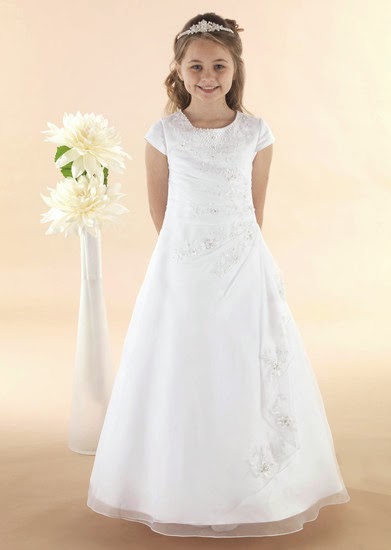
• A-line: A-line
Communion dress is fitted at the waist and comes down in a straight
line, widening slightly as it cascades toward the bottom, so it
resembles the shape of the letter A.
- What girls love about this shape: It is a sophisticated, grown-up look.
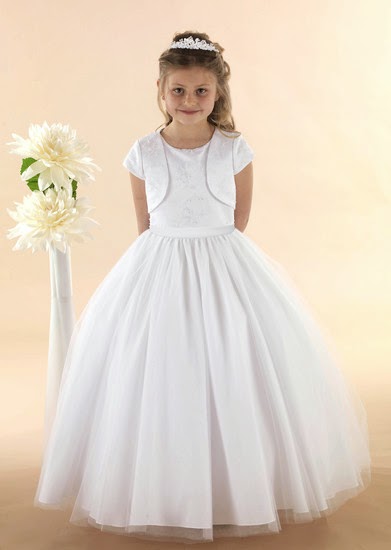
• Princess:
A princess Communion dress has a form-fitting bodice attached to a full
length, full skirt. The skirt may have ruffles or lace, but it has lots
of volume similar to formal dress seen in fairytales.
- What girls love about this shape: It makes them feel like a princess
• Ballerina:
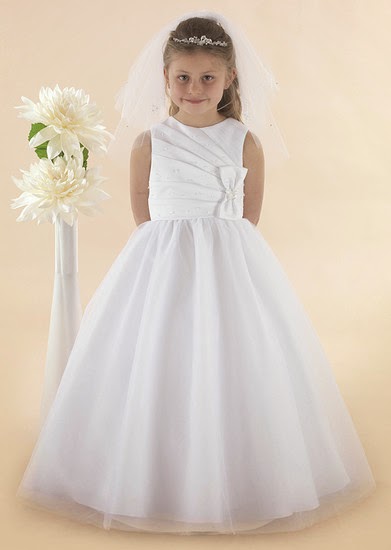
A ballerina style is characterized by a full, tulle skirt that
appropriately resembles that of a ballerina. It’s the type of Communion
dress that a young girl can’t help but twirl around in.
- What girls love about this shape:
It’s the Communion dress that dreams are made of. It is flattering for
most body types and makes a young girl feel grown-up in an
age-appropriate manner.
• Ball gown:
A ball gown is a sophisticated version of a princess-style dress.
Instead a full, poufy skirt, a ball gown may have more a classic shape,
but it is always for full-length gown.
- What girls love about this shape:
It is a wonderful introduction to the world of formal wear as it is
comfortable and stylish.
• Classic:
Clean, simple lines are what make this the most popular style of
communion dress hands down. The classic communion dress often has
sleeves and a full skirt that typically settles at mid-calf, or
tea-length, making it a modest, classic choice.
- What girls love about this shape: It puts the attention squarely on her, not on the fussy, fancy details of her dress.
• Full-length:
A full-length communion dress will always be tailored to touch the
floor at just the right height. This style is a very elegant choice that
can feature all types of details for a unique, personalized, yet
classic look.
- What girls love about this shape: If
they aren’t comfortable in short Communion dresses, this Communion dress
is the perfect choice.
• Modern:
Many young girls will lean toward a more modern style of communion
dress that mimics current fashion trends. Sleeveless and halter styles
as well as spaghetti straps are often highlighted in modern communion
dresses.
- What girls love about this shape: The details are straight out of a fashion magazine and they can feel like trendsetters.
• Traditional:
Of all communion dress styles, the traditional dress is perhaps most
often referred to as a mini version of a bridal gown. This is likely
because in addition to the beading and pearls, this dress features a
full shirt and is often accessorized with veiled headpieces and/or white
gloves.
- What girls love about this shape:
Traditional communion gowns are eye-catching, with intricate details
such as pearls, beading and sequins. They often feature delicate,
elegant materials like satin, organza, tulle and taffeta.
Communion Dress Materials
What the Communion dress is made of will
determine how it drapes and flows. It is probably best to familiaris e
your daughter with various types of materials so she can get a feel for
her preferences.
When trying on Communion dress, ask your
daughter how she feels in each Communion dress. Don’t let the visual
appeal dictate the dress materials because if she isn’t comfortable in
her dress, it will show. While shopping, also check for allergens. If
your daughter has sensitive skin, check for any materials that might
cause her irritation, breakouts or rashes.
The following are the most common materials used in First Communion dress today.
• Taffeta is a stiff
fabric, but it still moves with the body. It works wonderfully for more
structured communion dresses and as a bonus, some girls like the noise
that taffeta makes as it swooshes around.
• Organza. A blend
of nylon, polyester and silk, organza is sheer, light and flowing. It
can be used to add fluffy layers to a First Communion dress skirt.
Sometimes it creates volume that results in a dramatic, but yet still
age-appropriate look.
• Satin. With a
slight shine to its appearance and a gentle, velvety feel, many girls
opt for satin communion dresses. Satin is very durable and doesn’t tend
to tear easily, so it is a good choice for a young girl’s dress.
• Brocade is a
heavier material that features a raised textured design. It can be
stiffer than other types of dress materials, but very elegant looking.
• Chiffon. Light and
flowing, chiffon is often the fabric of every girl’s dreams. It moves
easily, drapes beautifully and has an airy, almost billowy feel to it.
• Lace. Delicate
lace creates a sweet, innocent look for a First Communion dress. Because
it has an open weave and it relatively see-through, lace is often used
as an overlay on a skirt, for accents on the bodice, to accentuate the
neckline or as a modest covering for the arms.
• Tulle. This
material is the perfect fabric to create volume in a dress. It is
typically not a fabric that stands well on its own but it creates a
beautiful effect when paired with other materials like satin or lace.
Communion dress Embellishments
Beyond the communion dress shape, the
dress style accents give each Communion dress its own personality.
Consider these popular design details:
• Beads, which come
in a variety of sizes. Tiny beads can be placed on the bodice of a First
Communion dress to add texture while larger beads can be used to add
shine to the skirt or all in a line to define the waistline without a
belt or band.
• Fabric rosettes.
These are commonly used around the neckline of First Communion dresses
or along the neckline. They bring a girlish innocence to the dress
• Pearls. The
hallmark of a pearl is its iridescent, opaque sheen. These are the
perfect accompaniments to any communion dress whether it is crisp white
or creamy ivory
• Crystals. Shiny and sparkly, crystals add a bit of bling to any First Communion dress style. They come in a variety of shapes and sizes.
• Sequins. These catch the light just right for extra flair to a Communion dress.
• Lace. Traditional lace is often used as an overlay for First Communion dresses or to add modesty to the sleeves.
• Ribbons. Ribbons
are a versatile accessory. They can used to accentuate a neckline,
create added dimension on the sleeves, to define a waistline when used
as a belt or to finish the hem of a Communion dress. Ribbons may be the
same color as the dress, a slightly darker hue or a contrasting shade to
add a pop of colour
• Rhinestones. These
add just the right touch of glitz and glamour to a communion dress.
They come in an assortment of styles, including individual colored and
clear rhinestones, trims, appliques, buckles, buttons, bands and pins.
Keep in mind that you need style
embellishments to enhance the look and style of the Communion dress, not
take away from it, so be careful not to overdo it.
Another item to consider with style
embellishments is how they will pair with the accessories you’re
planning to purchase. Jackets, shawls, headpieces, jewellery, belts,
shoes, veils and dress embellishments will all compete to be the focal
point of the dress if you’re not mindful.
Communion Dress Style Components
Each piece of the Communion dress from the
neckline to the skirt length serves its own purpose. If the communicant
isn’t comfortable with any one component of the dress, it can make or
break her decision.
Here some individual structural elements to think about:
Communion Dress Necklines
The neckline is the structural element
closest to the face, so it deserves some attention. Just as a haircut or
style should flatter the face, so should the neckline of a dress. It
should enhance facial features, not distract from her bright eyes and
beautiful smile.
Balance out a rounder facial shape with a
square-shape neckline or instantly shorten a longer facial shape with a
higher neckline, for example.
One thing is for sure: There is a neckline shape to complement any person’s most positive features.
These are some of the most common necklines seen predominantly in First Communion dresses:
- V-neck. This neckline
is characterized by its classic V-shape. In addition to its shape, the
neckline could be accentuated with ribbon, ruffles, lace or other
accents. Just make sure the v-neckline doesn’t plunge too far. You want
to keep the communion dress modest for church and age appropriate for
your daughter.
- Sweetheart. This
neckline is so named because it resembles a heart shape. It elongates
the upper body, so it is a good choice for shorter girls.
- Boat neck/bateau neckline.
A boat neck neckline means the fabric is cut straight across and sits
on or very near the collarbone. If your daughter has a narrow facial
shape or sloping shoulders, this neckline can add balance.
- Spaghetti strap. This neckline, typically a straight cut, is accentuated by a thin strap on each side.
- Square neck. Cut in the angle of a square, this neckline is flattering on just about any body shape.
- Halter. A halter top
has two straps that are tied at the back of the neck. This style is
flattering to many body types, but it does leave the shoulders
completely bare.
- Peter Pan collar. This style is best defined by its high neckline and soft, rounded-corner collars. It is perfect for a First Communion dress.
- Jewel. This describes a high neckline that has a pleasing rounded shape
- Strapless. This
neckline is not seen as often in First Communion dresses, but Just like
it sounds, this neckline covers the upper chest area without straps. The
neckline can be cut straight across or slightly curved.
- One-shoulders. This
neckline is not seen as often in First Communion dresses, but since has
been a growing trend in evening wear, it may begin showing up more and
more. This style features a bare or one-strap shoulder on one side and a
long- or short-sleeve on the other arm
Communion Dress Sleeves
Sleeve length is about comfort, style
and shape. A longer sleeve length might overwhelm a more petite figure
while a three-quarter-length sleeve could hide excess weight in the
upper arm, for instance.
In addition, families need to check in
with their priest or pastor for requirements in their church or parish.
Some parishes, for example, do not allow sleeveless, spaghetti strap,
tank-style dresses or other types of bodices that display bare shoulders
for modesty purposes, so if you select this type of dress, you will
need to purchase a jacket, cape, shawl, cardigan or other type of
cover-up for the church ceremony. Knowing religious guidelines and
customs in advance can help make your choices and avoid disappointment.
Here are the most standard sleeve styles in modern Communion dresses:
- Cap sleeve. This is a
very abbreviated sleeve that covers only the widest part of the
shoulder, not extending beyond the armpit level. It is not tightly
fitted and sits on the top of the shoulder like a mushroom cap in some
cases.
- A short sleeve covers the shoulder as well as part of the upper arm. It is a popular type of sleeve for a First Communion dress.
- A three-quarter length sleeve
falls to just around the elbow. This can be a fitted sleeve that covers
the upper arm snugly or it can be a more loosely draped sleeve.
- A bell sleeve is a longer sleeve that fits snugly from the shoulder to the elbow and then gradually flares out past the elbows to the wrist.
- A Dolman sleeve is the
opposite of a bell sleeve in the way that it is wide and flowing at the
top from the shoulder to the elbow and then tapers in more fitted from
the elbow to the wrist. It has a very wide armhole.
- Puff sleeve. A puff
sleeve can come in varying lengths, but it is marked by its gathering,
or pouf, at some point of the sleeve, most commonly the top.
- Tank style. The style of sleeve closely resembles a tank top as the “straps” are wider and fit securely on the shoulders.
- Sleeveless. This
sleeve is not to be confused with the strapless version. They are the
same in that they don’t cover the shoulders, but while a strapless dress
is held up at the bust line, a sleeveless dress commonly has additional
fabric at the neckline, such as a high neckline with a keyhole opening,
for example.
Communion Dress Waistlines.
The waist of a dress can accentuate the
body shape, but girls of age for Holy First Communion most likely don’t
have many curves yet, so they are free to select the waistline that
makes them feel the most comfortable.
Here is a look at some common dress waistlines:
- Empire waist. This
waistline is often seen on long, flowing dresses as the waist is marked
just below the bust, creating an elongated appearance.
- Cinched waist. A belt
will often cinch the waist at the natural waistline on this dress style.
A shirt dress is commonly cinched, for instance. On a First Communion
dress, the belt is likely to contain some bling, such as crystals or
rhinestones. However, the belt could also be a band of silk flowers or
other type of adornment.
- Natural waist. A
Communion dress with a natural waist will fall squarely at the natural
waistline, making it a comfortable and familiar option.
- A drop waistline is
closely associated with flapper girl style from the 1920s, but has come
back into vogue in recent years. This type of waistline falls at or
slightly lower than the hips.
- A Basque waistline
forms a U or V shape in the middle of the waist. It balances the hips
and is a common waistline used in ball gown and longer, formal Communion
dress styles.
- An asymmetrical waistline
is a modern look that involves a seam that starts at the natural
waistline, but then extends at an angle into the skirt area. Think of it
as a drop waistline with a slant.
- High-waisted. This waistline falls in between an empire waist and a natural waist.
Communion Dress Skirt length.
The length of the skirt often defines
its overall style. A long Communion dress, for instance, isn’t often
looked at as fun and flirty while a shorter dress with a hemline above
the knee isn’t appropriate for many formal occasions.
The traditional length for a First
Communion dress is floor length, meaning that the hem touches the top of
the shoes. However, modern Communion dresses include a range of modest
and age appropriate skirt lengths, including:
- Knee length. A very common Communion dress length, the hem extends to within an inch or so above or below the knee.
- Tea length. This is a
slightly longer style with the hem hitting just below the knee to
mid-calf. These Communion dresses are often designed with a fuller skirt
so they aren’t too constricting on the legs.
- Ballerina. A long
skirt with lots of volume that reaches between the mid-calf and ankle is
often described as a ballerina length. Don’t confuse this with a
shorter, stiffer skirt known as a tutu, which is commonly worn by
ballerinas as well.
- Ankle length. Just as
the name implies, an ankle-length skirt touches the ankle area. This is
close to a full-length Communion dress, which typically reaches to the
top of the shoes.
- Angle cut or Hi Lo,
where the Communion dress is longer is the back than it is in the front.
It gently curves from the front to the back, revealing a flattering,
modern bell-like shape.
- Full length. This Communion dress extends from the waist to the top of the shoes for an elegant, traditional appearance.
- Train cut. The length
on this skirt is slightly longer in the back, giving the appearance of a
slight train, similar to – but not quite as dramatic as – a traditional
wedding dress.
Communion dress Hemlines
Beyond just the length of the Communion
dress is the shape of hemline itself. Most First Communion dress
hemlines are straight, but some more trendy styles are incorporating
- A ragged hemline,
which zigzags around the circumference of the dress and balloon styles
which gather at the bottom of the hemline to create a voluminous effect.
- A balloon style is often seen in shorter dresses.
- A handkerchief hemline drops down in triangle forms around the legs. It is usually a seen in a longer, draped style of dress.
Communion Dress Fit
Each designer will have different
standards, so it is important to have precise measurements available. To
achieve the best fit possible:
• Measure your daughter in the hips, waist and bust.
• Have these measurements handy when shopping in stores or online.
• Double-check each designer’s size charts when shopping online or try on the dress in the shop as looks can be deceiving.
• Seek out alternative sizes if
necessary. You want your daughter to feel comfortable and look great.
More and more dress designers are offering their First Communion apparel
in a range of sizes, including petite, tall and plus-size, so selection
shouldn’t be a problem.
• Ask for a referral to a quality
tailor. Dress shops should have their own seamstress for alternations or
be able to provide you with the name and contact information for a
tailor who can complete the work you to provide a precise, custom fit.
How to measure for a communion dress
Measure your daughter in the hips, waist and bust.
When taking your little girl’s
measurements, make sure she’s standing bare feet, back straight, head
looking up, against a flat surface, a wall would be the best place for
this. With a pencil mark the top of her head, so now you have her actual
height.
Once you have done this, stand her forward a little bit and then measure her around the hips, waist and chest.
To measure for dress length, stand her
in bare feet with back against the wall, measure from the nape of the
child’s neck to the floor. This will give you the dress length from nape
to hem.
We recommend that you allow a couple of
inches extra in the waist and the chest areas so the First Communion
dress is not too tight on her.
As a rule of thumb, each girl’s First Communion dress is sized accordingly to her height.
or instore at
Ceremonial Celebrations Boutique
18 Brockenhurst Road
South Ascot
Berkhire
SL5 9DL
01344 297160